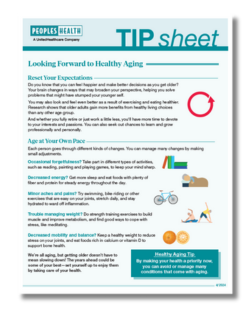
Set Goals Now: Start the Year With a Strong Health Foundation
March 11, 2026

In a nutshell—planning early ensures you get the preventive care you need when you need it, avoid unexpected costs and stay on top of where you want to be with your health.
Step 1: Start With an Annual Wellness Visit
Your first step each year should be to see your primary care provider (PCP) for an annual wellness visit. This covered service helps you and your PCP create or update your personalized prevention plan. The visit is not a physical exam, but it includes:
- Reviewing your medical and family history
- Reviewing a list of your current medications and providers
- Checking your blood pressure, height, weight and other routine measurements
- Completing a cognitive assessment
- Getting health advice and referrals for preventive services
Step 2: Know the Preventive Care You Need
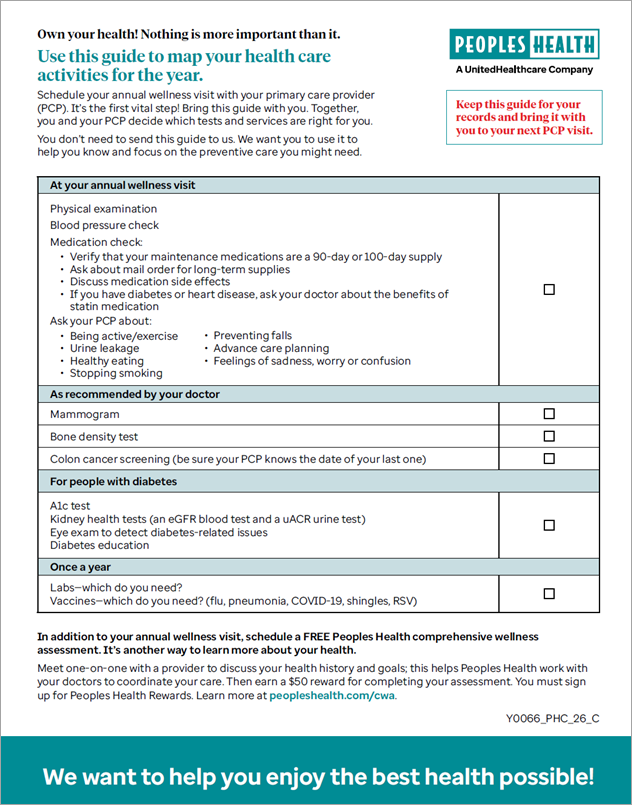
Your personalized prevention plan is how you know which services you need. Preventive care helps detect health issues early and keep you healthy. The services right for you are based on your age, sex and health history. See the back cover for where to download our preventive care checklist of recommended screenings and tests. Your PCP will let you know which to schedule.
Step 3: Schedule Care Strategically
Avoid delays:
- Book routine appointments early, at the beginning of the year when schedules fill quickly.
- Call your PCP’s office to request a referral if needed before scheduling a specialist visit. (See the quick tips on the previous page.)
- Also call your doctor’s office to explain your symptoms if you need a sick visit. This helps your PCP prioritize visits.
Smart Tip: Keep a calendar of your appointments and recommended screenings to stay organized.
Let's Talk Medications
Your annual wellness visit isn’t just about getting your vitals checked—it’s your chance to make sure your medications are doing their job. Are they helping you feel your best and working well together? If not, now’s the time to speak up.
Why do this?
Your health changes over time, and so can your medication needs. Reviewing your medications with your doctor helps prevent side effects, avoid drug interactions and keep your treatment plan on track.
- Ask the big questions. Are these medications still right for me? Are there better options?
- Share what you notice. Side effects or changes? Your doctor needs to know.
- Make refills easy with fewer pharmacy trips. Ask about a 100-day or 90-day supply instead of a 30-day supply.
- Set it and forget it. Sign up for auto-refills. Or get home delivery.
WELLNESS EVENTS
Click below for monthly wellness event schedule
RECENT POSTS






PREVENTIVE CARE CHECKLIST
GUIDE TO HEALTHY AGING